ES ▾
Limpieza de Residuos de Fentanilo en Des Moines, IA
Profesionales con licencia para limpieza de residuos de fentanilo en Des Moines que utilizan métodos ecológicos y eliminación responsable: precios honestos, programación rápida y trabajo bien hecho.
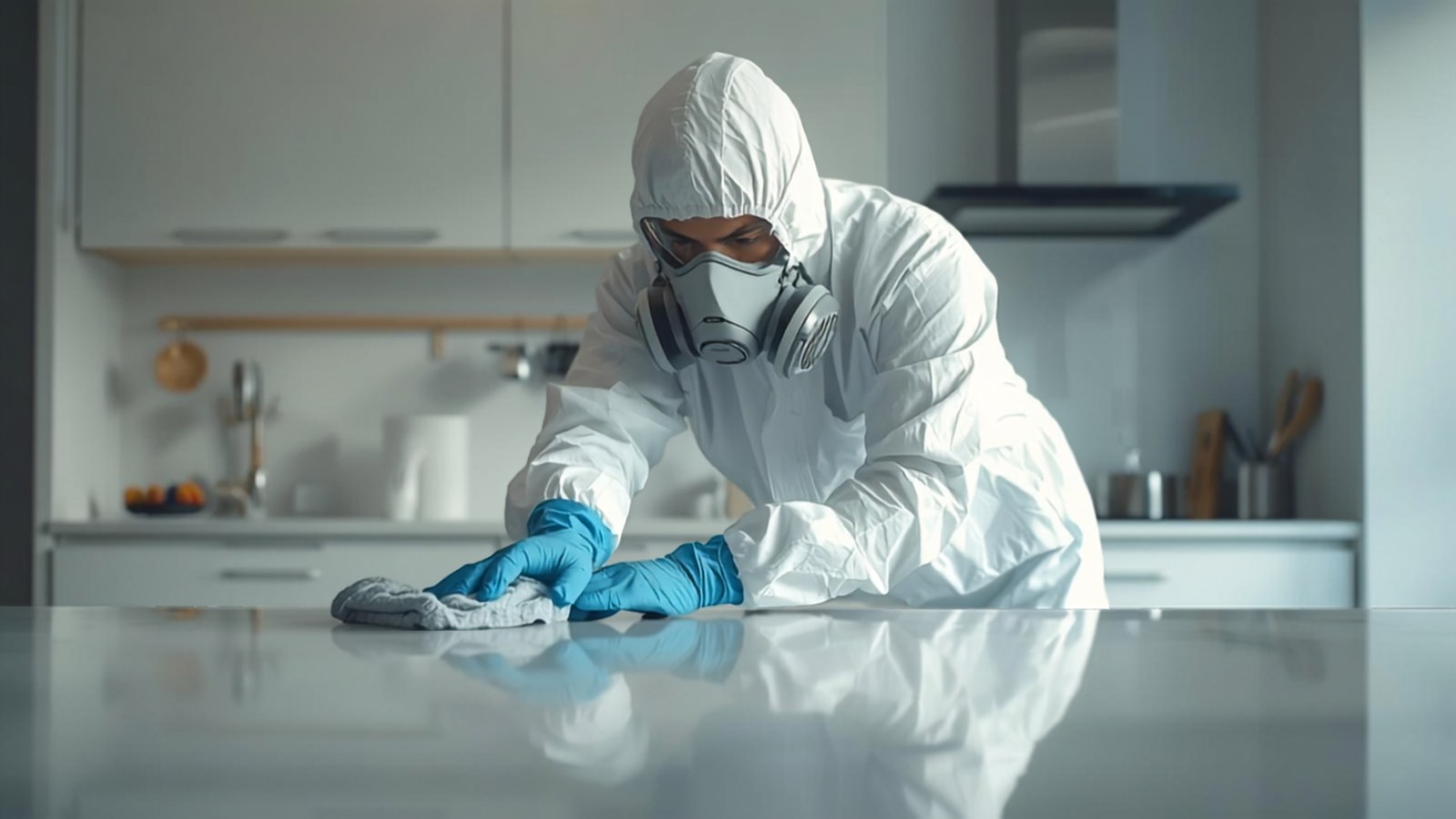
Qué incluye
Limpieza de residuos de fentanilo
De reparaciones urgentes a instalaciones planificadas, el equipo con licencia de Des Moines Biohazard Cleanup se encarga de la limpieza de residuos de fentanilo en Des Moines, con precio acordado antes de comenzar.
How it works
Preguntas frecuentes sobre limpieza de residuos de fentanilo
¿Los profesionales de limpieza de riesgos biológicos tienen licencia y seguro en Iowa?+
¿Cuán rápido pueden responder en Des Moines?+
¿Ofrecen presupuestos gratuitos?+
¿Qué barrios de Des Moines atienden?+
¿A quién llamo para una emergencia de limpieza de riesgos biológicos en Des Moines?+
¿Cómo puedo verificar que una empresa de limpieza de riesgos biológicos en Des Moines tiene licencia y es legítima?+
Fentanyl Residue Cleanup in Des Moines
Fentanyl residue cleanup requires a specialized approach that goes far beyond standard biohazard remediation. This synthetic opioid is up to 100 times more potent than morphine, and even trace amounts left on surfaces can cause severe health effects through accidental skin contact or inhalation. In Des Moines, properties that have been used for drug production, smoking, or storage often have invisible contamination embedded in carpets, drywall, ventilation ducts, and porous materials. Des Moines Biohazard Cleanup follows a rigorous process to address this threat. Our team begins with a detailed assessment using rapid test swabs and surface sampling to identify contamination zones. We then set up negative air pressure containment to prevent particles from spreading to clean areas. The removal phase involves carefully disposing of heavily contaminated porous items like upholstery or insulation. For hard surfaces, we apply a two-step chemical decontamination using agents specifically formulated to break down fentanyl compounds, followed by HEPA vacuuming and wet-wiping with detergent. After the initial cleanup, we conduct verification testing to ensure all residue has been eliminated. This is not a task for household cleaners or general janitorial services—improper handling can aerosolize the substance or leave behind dangerous levels.
For property owners in Des Moines, fentanyl contamination poses both health risks and legal liabilities. Homes, apartments, or commercial spaces with known or suspected contamination may be uninhabitable until professionally remediated. Local health codes and insurance policies often require documentation of proper cleanup. Des Moines Biohazard Cleanup understands the unique challenges of our area, from older neighborhoods like Beaverdale with porous brick and plaster to newer developments with sealed concrete floors. We work discreetly to restore properties, whether it is a rental unit after a tenant incident or a family home after a loved one’s passing. Our process ensures that every trace of fentanyl is removed, making the space safe for reoccupancy. By choosing professional remediation, Des Moines residents avoid the risk of cross-contaminating other areas or exposing themselves to harmful substances.
Areas We Cover in Des Moines
We provide fentanyl residue cleanup across the Des Moines metro area, including neighborhoods such as Accent, Arbor Peaks, Avon, Avon Lake, Beaverdale, and Brook Run. Our team is familiar with these communities and can respond to properties near local landmarks like 2AU Limited, 2nd Amendment Gun Shop, 300 Craft & Rooftop, and 801 Chophouse. Whether your property is in a residential enclave west of downtown or near the commercial corridor along Ingersoll Avenue, we are equipped to handle cleanup jobs of any size. Our coverage also extends to surrounding suburbs and rural areas within reasonable distance, ensuring that no property in the Des Moines region lacks access to professional fentanyl remediation.
What to Expect
When you contact Des Moines Biohazard Cleanup for fentanyl residue removal, expect a thorough and methodical process. Our team first conducts an on-site assessment using specialized test swabs to map contamination. We then establish containment barriers and negative air pressure to isolate the area. All porous materials that cannot be decontaminated are carefully removed and disposed of as hazardous waste. Non-porous surfaces are cleaned with chemical solutions proven to neutralize fentanyl, followed by HEPA vacuuming and multiple wet-wipe passes. After the cleanup, we perform post-remediation testing to confirm residue levels are below safe thresholds. Throughout the job, we maintain strict personal protective equipment protocols and provide documentation of all work completed for